|
|
More
Safety Circuits 12v Battery Load Cutout Circuit --
August 23, 2009
Lead-acid batteries should not be
discharged below a certain point if they are to last. Also, you don’t want
certain 12v powered devices, which might be plugged into a car’s cigarette lighter
outlet, to drain the car battery down to a point where the car’s engine will not
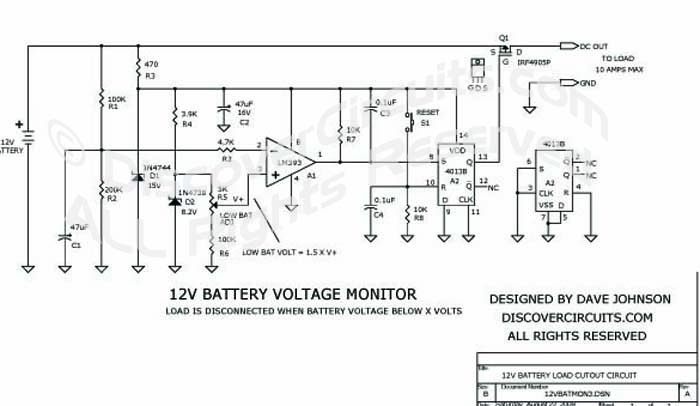
start. To prevent battery damage or a dead battery, the circuit below
disconnects a load from the battery when the voltage dips below a fixed but adjustable
voltage and will not reconnect the load until a reset button is pressed. To keep
the whole circuit efficient and compact, a medium current rated p-channel FET forms
the power switch. A 8.2v zener diode forms the voltage reference while a second
15v zener diode acts as a transient voltage protector. |